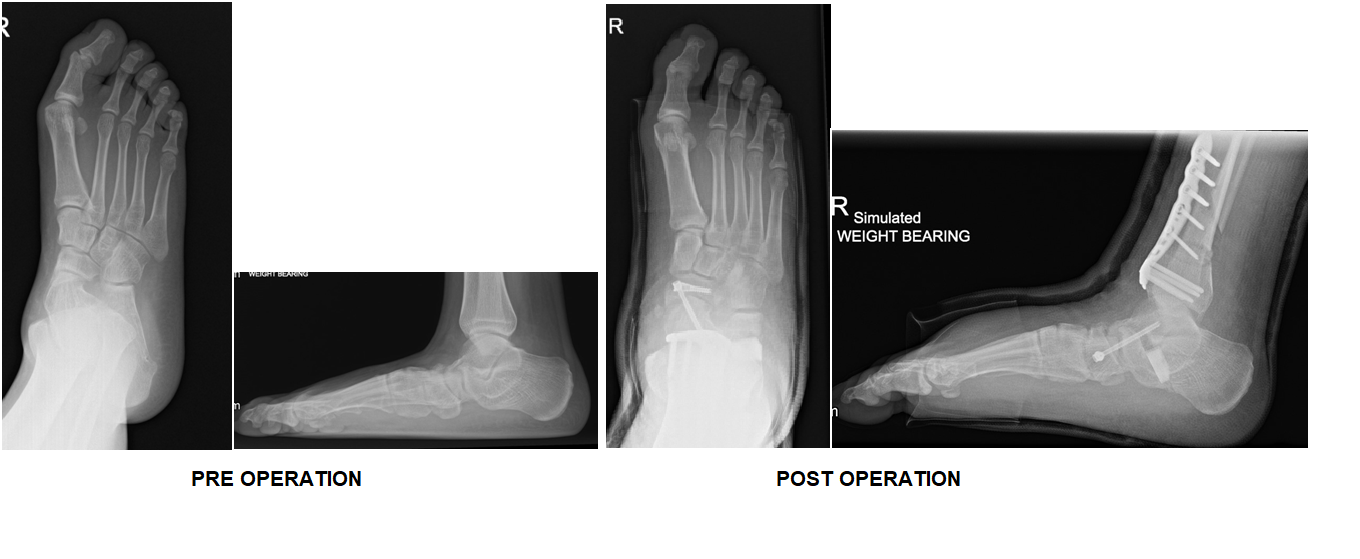
Neurological Flat Foot (often seen in Cerebral Palsy)
Some children with neurological conditions — most commonly cerebral palsy — develop a different type of flat foot. Unlike flexible flat feet seen in otherwise healthy children, this deformity is:
What symptoms occur?
Children typically develop symptoms in stages:
Early stage
Later stage
This happens because the heel bone shifts outward and presses against the fibula
(subfibular impingement).
Can it be managed without surgery?
Long-term treatment with orthoses or special footwear is often difficult because the deformity is rigid. However, non-operative treatment is always tried first.
Non-operative options
If symptoms persist or footwear cannot be tolerated, surgery is usually required.
Role of Botox injections
Botulinum toxin (Botox) can be helpful in children with neurological muscle tightness.
Why is it used?
It relaxes tight muscles so that:
Can injections be repeated?
Yes — they may be repeated if needed.
Spread of the medication beyond the injected muscle is extremely rare.
Why is it not usually done in clinic?
Although safe, the injection requires precise localisation of muscles using a nerve stimulator and often multiple needle insertions.
Therefore it is usually performed in theatre under light anaesthesia for comfort and accuracy.
Surgical Treatment
Surgery depends on how stiff the foot is.
Soft-Tissue Procedures
Bony procedures (rigid deformity)
Associated problems such as out-toeing or bunions may be corrected during the same operation or as a staged procedure.
Key message for parents
✔ Neurological flat feet behave differently from common childhood flat feet
✔ The deformity often progresses over time
✔ Botox and orthoses may help early
✔ Surgery is frequently needed to restore comfortable walking