
What is a Flat Foot?
A flat foot is a condition where the arch (instep) of the foot is low or touches the ground.
All children are born with flat feet. The arch usually develops naturally between 7 and 9 years of age.
After this age, flat feet may be related to other underlying factors:
Are Flat Feet Painful?
Most children do not have symptoms and are unaware they have flat feet.
Symptoms are uncommon under the age of 10 years.
In older children, pain may occasionally occur:

Flexible Flat Feet
Flexible flat feet are commonly associated with generalised joint laxity (hypermobility).
Most children remain completely active and require no treatment.
Some children may develop:
Treatment is only required if symptoms are present.
Do children need investigations?
If the child has:
➡ No X-rays or scans are needed
Investigations (X-ray/MRI) are only arranged if:
When no pain is present
No treatment is required.
The child can participate in all activities and sports normally.
Non-operative treatment (first line)
Used mainly for symptom relief

Some children develop pain due to tight muscles.
This may occur in:
When stretching alone is insufficient, serial casting may be recommended.
Serial Casting
Serial casting gently stretches tight muscles using walking plaster casts.
Children can:
Calf muscle casting
After removal → physiotherapy is required
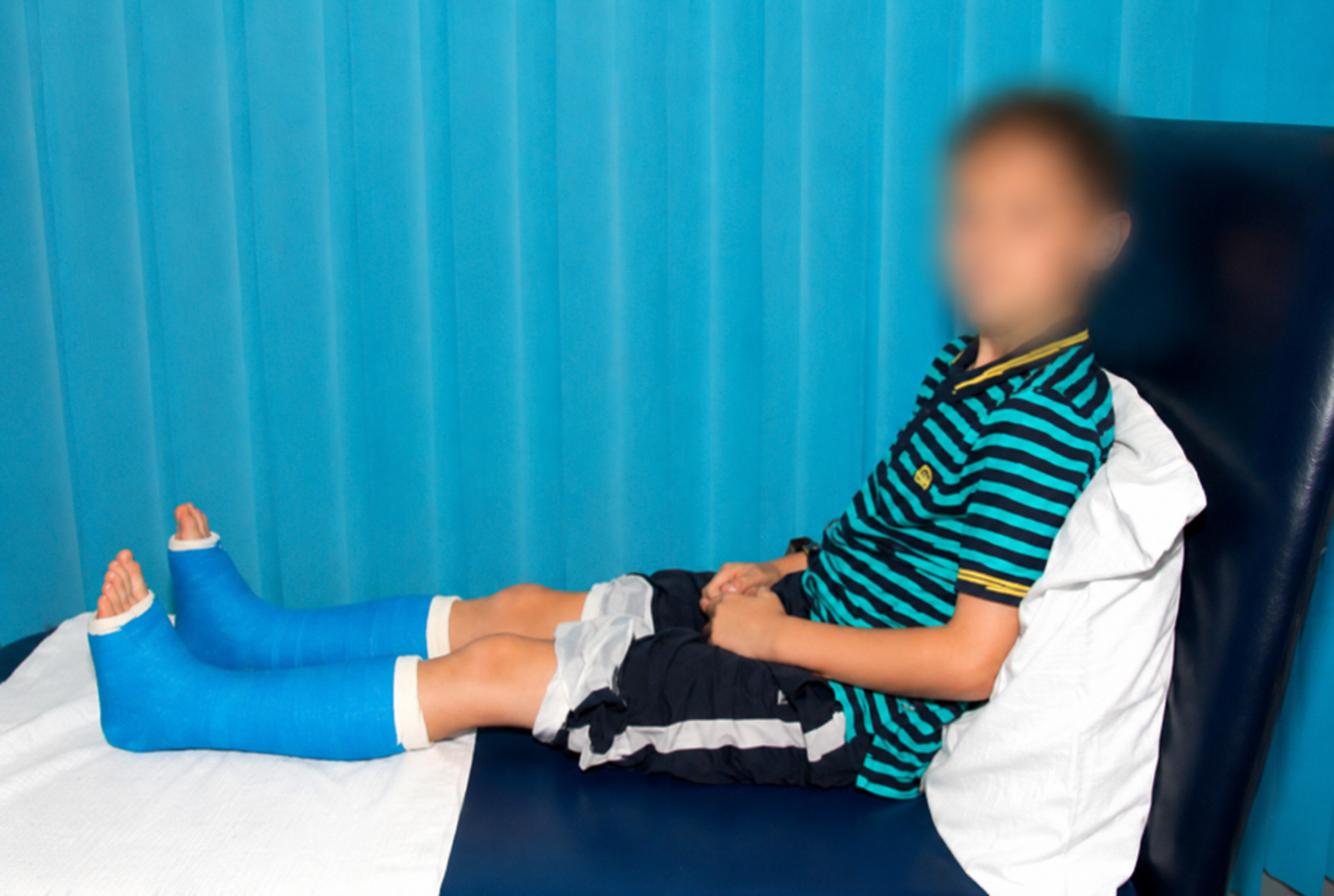
Temporary weakness occurs but improves with physiotherapy.
When is surgery considered?
Surgery is rare and only advised when:
Weight-bearing X-rays are required before surgery.
Surgical Options

Rigid Flat Foot
Rigid flat foot is usually caused by a tarsal coalition
(an abnormal connection between foot bones present from birth).
Children often present with:

Non-operative
Insoles may provide comfort but do not correct the problem.
Operative
Keyhole surgery to remove the coalition restores movement.
After this, treatment follows the same pathway as flexible flat foot.
Seen in children with:
Features:
Non-operative:
Additional treatments:
Surgery is often required if deformity progresses.
Surgery is frequently indicated if the flat foot persists despite these non-operative interventions.

Most children with flat feet:
✔ Do not develop pain
✔ Do not need treatment
✔ Can participate fully in sports
Treatment is only required when the foot becomes painful or stiff.
