
Patients typically experience pain and swelling around the ankle. The discomfort is aggravated by walking and prolonged activity and, in advanced stages, may also disturb sleep.
Non-Operative Management
Initial treatment focuses on symptom control and reducing joint load:
Surgical Management
Early Arthritis
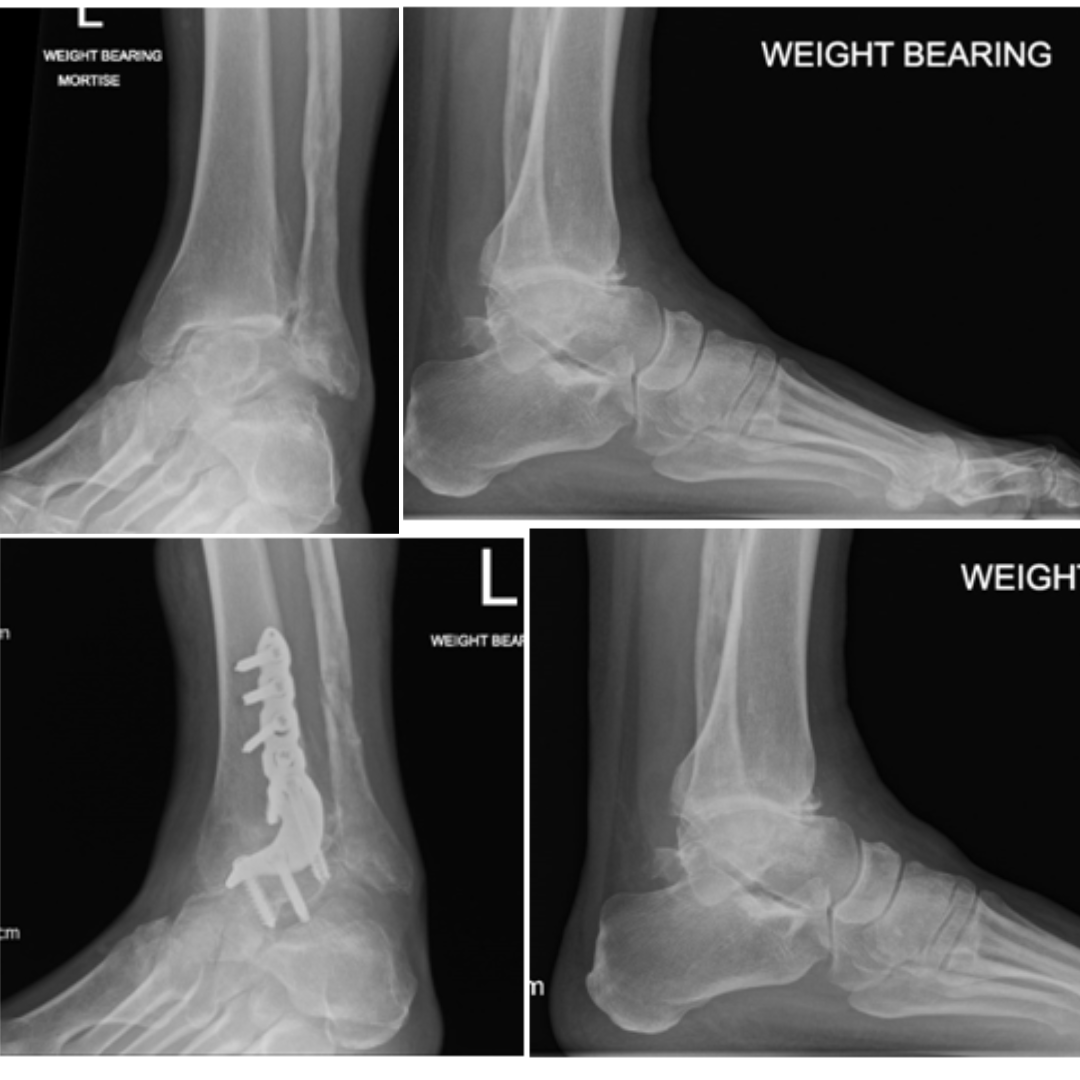
Specialised weight-bearing X-rays and MRI scans are used to assess alignment and joint damage.
Corrective procedures to realign the bones and redistribute load across the ankle may relieve symptoms and delay the need for joint-sacrificing surgery.
Ankle fusion (arthrodesis)
A reliable and well-established treatment for severe ankle arthritis. The damaged joint surfaces are fused, eliminating painful movement. Nearby joints compensate to maintain functional mobility.
Recovery
This procedure aims to provide durable pain relief and a stable, plantigrade foot suitable for everyday activities.
The aim of ankle replacement is to relieve pain while preserving joint movement.
I do not personally perform this procedure; therefore, patients wishing to consider this option will be referred to a specialist colleague for further discussion.
Potential disadvantages of ankle replacement
If the implant fails or wears out, further surgery is required, which may involve either revision replacement or conversion to an ankle fusion.
