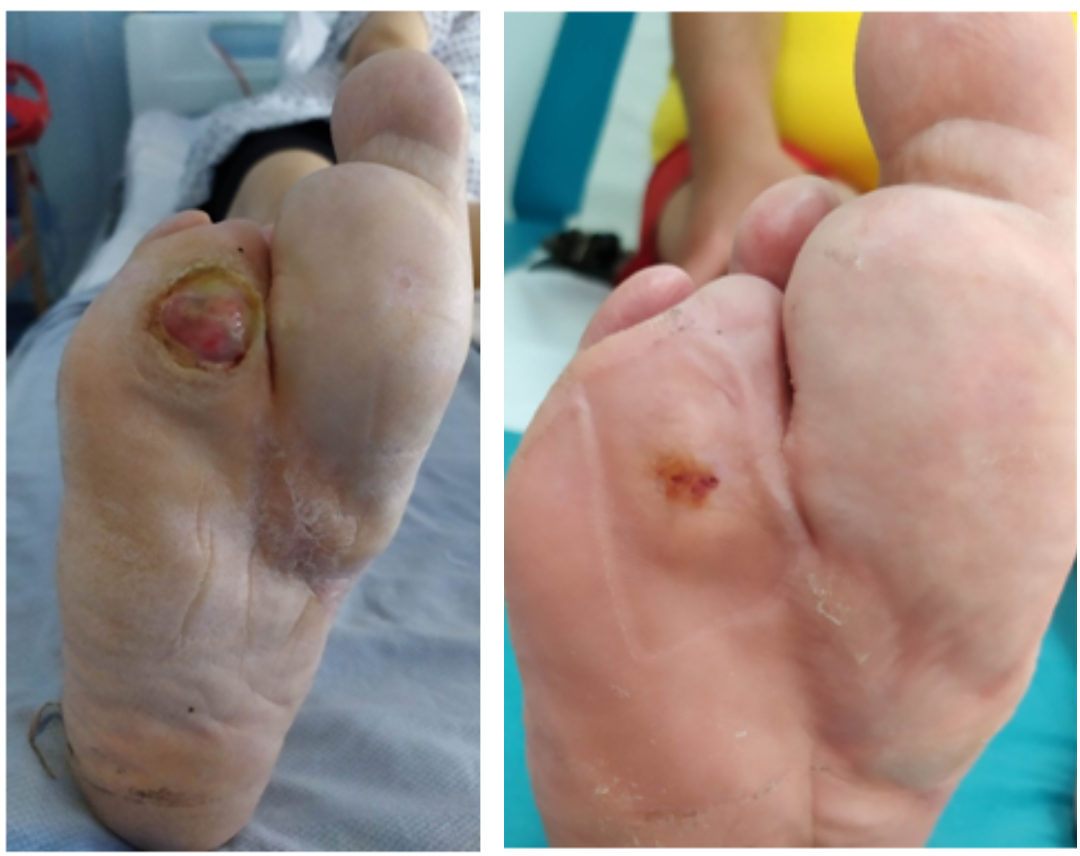
What is a diabetic forefoot ulcer?
A diabetic forefoot ulcer is a wound that develops on the front part of the foot (usually under the toes or ball of the foot) due to increased pressure on the skin.
It most commonly occurs in people with diabetes-related nerve damage (peripheral neuropathy).
Neuropathy reduces sensation and alters foot mechanics, so areas of high pressure are not felt and the skin gradually breaks down.
Poor blood circulation may also contribute and delay healing.
Why does it happen?
Diabetes can affect:
Most ulcers therefore develop in one of two ways:
Symptoms
Many patients feel little or no pain because of neuropathy.
Common signs include:
Investigations
Treatment
Initial (non-operative) treatment
This is the most important stage and is led by the multidisciplinary diabetic foot team:
Many ulcers heal with correct off-loading alone.
When is surgery needed?
If the ulcer persists or keeps recurring despite good off-loading, surgery may be recommended.
The procedure depends on the underlying cause and may include:
Surgery aims to remove the pressure source, not just close the wound.
Important message
A diabetic ulcer is a pressure problem, not just a skin problem.
Unless pressure is permanently reduced, ulcers frequently return.
Early treatment greatly reduces the risk of infection, hospital admission and amputation.